
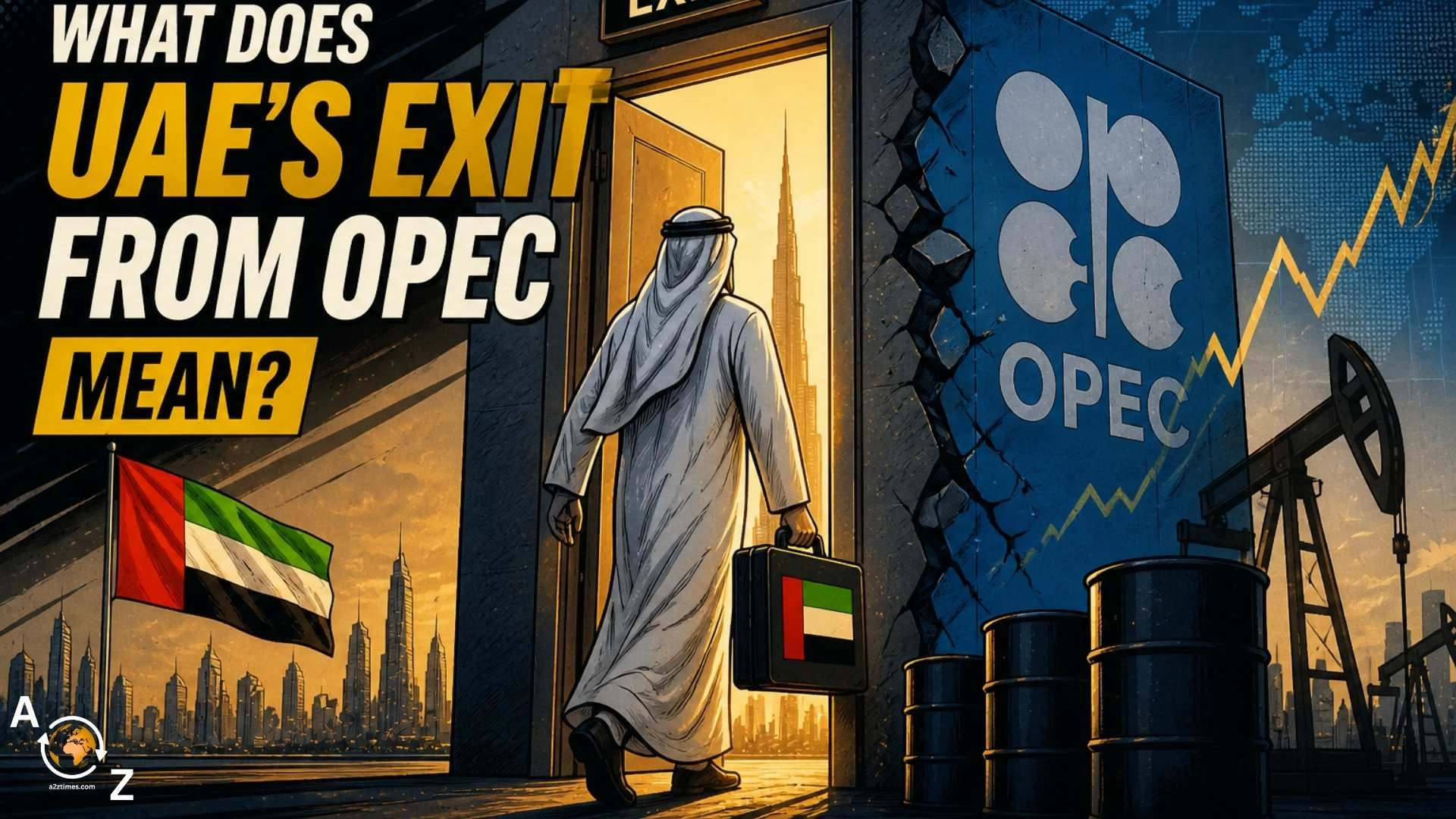

The UAE left the Oil Producer and Exporter Countries (OPEC), a group of oil-producing nations created to control global oil prices in the interests of its members. The group has often been called a cartel due to its ability to manipulate oil prices through different methods.
Impact on Global Oil Supply
Globally, 25% of world oil consumption comes from the Saudi-UAE-Bahrain-Iran-Qatar network, and OPEC controls nearly 80% of global oil supply. Within the erstwhile OPEC (including the UAE), the UAE accounts for 6.4% of global oil supply, whereas Saudi Arabia accounts for roughly 15%.
The total oil production per day as of May 2026 is around 3 million barrels per day, 10% of global production capacity. If they scale up to their maximum capacity, i.e., up to 5 million barrels per day, they can add another 7%-8% production to the global oil supply.
At a point when Venezuela could see its sanctions lifted within 2026, this oil supply could easily crash prices down to $50 per barrel, i.e., the same price before the Iran-Israel war.
The Saudi-UAE Rift that Caused the UAE’s OPEC Exit
The differences between Saudi Arabia and the UAE emerged as the primary reason for this departure. Both countries have been at loggerheads with each other in multiple instances, such as:
- Gaza Issue: There is a slight difference with the UAE willing to be more cooperative with Israel, whereas the Saudis want a clear path towards a Palestinian State.
- Sudan: The Saudi Arabian government backs the government forces, i.e., SAF, whereas the UAE has been accused of backing the RAF.
- Yemen: The alliance fighting against the Houthis collapsed as Saudi Arabia continued backing the Presidential Leadership Council, while the UAE backed the Southern Transition Council.
- Somalia: In the independence movement of Somaliland, the UAE is suspected to be a shadow backer of the Somaliland government (also recognized by Israel), whereas the Saudis support the Federal Government in Mogadishu.
